

An old, inefficient boiler doesn’t just cost more to run, it can quietly hold back your property’s EPC rating, create problems if you’re a landlord, and factor into how a buyer sees your home. How much difference a boiler actually makes, and what the current UK rules really require, is where a lot of the advice online gets outdated or oversimplified. Here’s an accurate breakdown, covering Nottingham and the surrounding areas we work in day to day.
An Energy Performance Certificate scores a property from A, most efficient, to G, least efficient, based on a standardised assessment that looks at insulation, glazing, and your main heating system and controls. Your boiler’s age, type and efficiency rating is one of the more heavily weighted factors in that calculation, alongside things like loft and wall insulation.
In practice, swapping an old, non-condensing boiler, particularly anything rated G on the old efficiency scale and running at somewhere around 70% to 75% efficiency, for a modern condensing boiler at 92% or higher, is one of the single most impactful individual upgrades you can make to a property’s EPC score. In a property that doesn’t have serious insulation problems, this kind of upgrade can be enough to shift the rating by a full band on its own, though a home with poor insulation or single glazing will need more than a boiler swap to see a big jump.
If you’re selling or renting out a property, your EPC rating isn’t just a nice-to-have, it’s a legal requirement that has to be made available to buyers and tenants, and for landlords specifically, it determines whether you’re allowed to let the property at all.
As it stands, private rental properties in England and Wales need a minimum EPC rating of E to be legally let, a rule in place since April 2020. There has been ongoing discussion about raising this to C, and the goalposts have moved more than once: a previous government scrapped an earlier 2025 target, and the current position, confirmed in the Warm Homes Plan published in January 2026, is that the minimum will rise to EPC C for all tenancies from 1 October 2030, with a £10,000 cap on what landlords can be required to spend getting there, assessed under a new Home Energy Model. If you’re a landlord with a property currently rated E or F, it’s worth planning improvements well ahead of that date rather than waiting, given fines for non-compliance can run up to £30,000 per property.
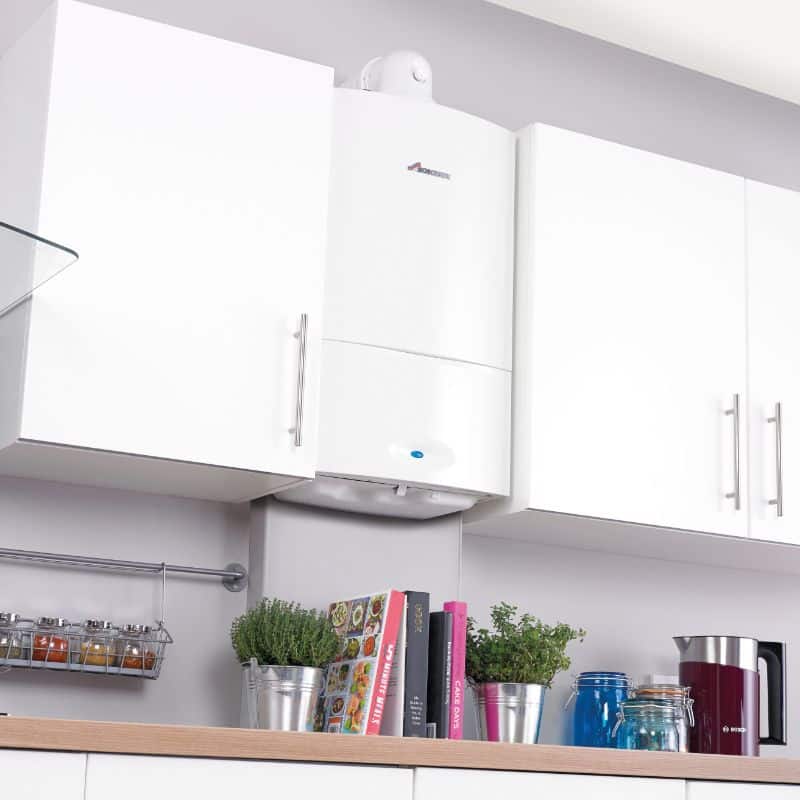
This is where a lot of articles overstate things. There’s no guaranteed uplift in sale price from fitting a new boiler, and be wary of anyone who tells you otherwise. What’s genuinely true is that buyers are increasingly factoring running costs and EPC ratings into their decisions, particularly given how visible energy bills have become in recent years, and estate agents increasingly report that a poor EPC rating or an obviously ageing heating system can put some buyers off or become a point of negotiation on price. A modern, efficient boiler with a reasonable EPC rating won’t hurt your position, and removes one common objection buyers raise, but it’s realistic to think of it as protecting your property’s appeal rather than guaranteeing a specific increase in value.
This is often the more persuasive point for buyers than the EPC certificate itself. An old, inefficient boiler running at 70% to 75% efficiency is quietly wasting a meaningful share of the gas it uses, compared with the 92%+ efficiency required of modern condensing boilers. Being able to show a recent boiler installation, ideally with the paperwork and warranty to back it up, gives a buyer a concrete reason to expect lower running costs, which tends to land better than an abstract letter rating on its own.
A couple of things in this space have moved on since older advice was written. The Renewable Heat Incentive closed to new applicants in March 2022 and is no longer available, so ignore any guide still recommending it. What’s actually live right now is the ECO4 scheme, which can fund a fully or partially subsidised boiler replacement for eligible households, generally those on certain means-tested benefits with an old, inefficient boiler, and it’s currently due to close on 31 December 2026. If you’re considering a heat pump rather than a gas boiler, the Boiler Upgrade Scheme offers a £7,500 grant, though this applies to low-carbon heating rather than gas boiler replacements.

To keep this honest: a boiler is rarely the single biggest factor in a property’s overall EPC rating, insulation, glazing and general building fabric usually matter just as much, sometimes more, especially in older housing stock common across Nottingham and the surrounding areas. If your property has a poor rating despite a reasonably modern boiler, it’s worth getting a full EPC assessment to see where the bigger gains are actually available, rather than assuming another heating upgrade is the answer.
When it comes to increasing the value of your Nottingham home, making energy-efficient upgrades is an excellent investment. One such upgrade is installing an energy-efficient boiler, which not only benefits the environment but can also have a positive impact on your property’s value. In this article, we will explore how an energy-efficient boiler can add value to your home and why potential buyers are increasingly attracted to properties with sustainable and cost-effective heating solutions.
Reduced Energy Costs:
1. One of the primary advantages of installing an energy-efficient boiler is its ability to significantly lower energy consumption and associated costs. Energy-efficient boilers utilize advanced technology to maximize heat transfer and minimize heat loss, resulting in greater fuel efficiency. By reducing energy bills, these boilers make your home more appealing to potential buyers who are conscious of long-term savings and environmental considerations.
Improved Energy Performance Certificates (EPC):
2. Energy Performance Certificates (EPC) are assessments of a property’s energy efficiency, with ratings ranging from A (most efficient) to G (least efficient). An energy-efficient boiler can help improve your EPC rating by boosting the overall energy efficiency of your home. A higher EPC rating signifies lower energy costs, reduced carbon emissions, and increased desirability for buyers seeking environmentally conscious properties. The current minimum energy efficiency rating for rental properties is E, but this will increase to C by 2028.
Green Credentials:
3. With growing environmental awareness, many buyers are actively seeking homes with eco-friendly features. An energy-efficient boiler demonstrates your commitment to sustainability, making your property more attractive to environmentally conscious buyers.
Enhanced Comfort and Convenience:
4. Energy-efficient boilers not only help lower utility bills but also provide consistent and reliable heating. These boilers are designed to deliver efficient heat output while maintaining temperature control and comfort. Buyers appreciate homes that offer modern, efficient heating systems that ensure a comfortable living environment. The presence of an energy-efficient boiler can contribute to a positive impression of your property’s overall value.
Government Incentives and Regulations:
5. In the United Kingdom, the government has implemented schemes and regulations to encourage energy-efficient upgrades. For example, the Energy Company Obligation (ECO) and the Renewable Heat Incentive (RHI) offer financial incentives to homeowners who install energy-efficient heating systems. By having an energy-efficient boiler installed, you may be eligible for these incentives, which can add value to your property.
Future-Proofing Your Home:
6. Investing in an energy-efficient boiler demonstrates a forward-thinking approach to homeownership. As sustainability becomes increasingly important, energy-efficient heating systems are likely to become a standard expectation among homebuyers. By proactively upgrading your boiler, you future-proof your home and position it favorably in a competitive market.
Installing an energy-efficient boiler in your home can offer multiple benefits, from reducing energy costs and improving EPC ratings to appealing to environmentally conscious buyers. The value added to your property goes beyond monetary gain, extending to improved comfort, reduced carbon footprint, and eligibility for government incentives. By embracing sustainable heating solutions, you enhance your home’s desirability, potentially attracting a wider range of buyers and commanding a higher selling price. As the demand for energy-efficient homes continues to grow, investing in an energy-efficient boiler is a smart move that benefits both your pocket and the environment.